


What’s Wrong with this Court?
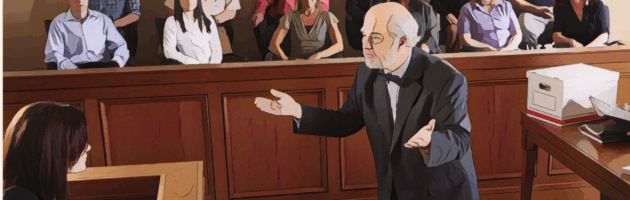
This two-part lesson can be completed individually or in groups. The first part walks students through the content on judicial independence found on the Judicial Learning Center’s web page. This portion could be completed as homework in preparation for the second part.
The second part uses a silly, fictious courtroom scenario, with 19 inaccurate statements. These statements sometimes target vocabulary, but also involve the trial process and judicial ethics. Students will use what they know about the judicial process, courts, and judicial independence to read the case and pick out the inaccurate statements. Once they are identified, students should note what is wrong with the statement and provide a correction in the space given.
Download the PDF
Corresponding Student Center Pages
Suggested Time Needed
2 class periods
- A: Understanding Judicial Independence
- B: What’s Wrong with this Court?
After completing this activity, students will:
- Understand the factors that guarantee the judicial branch’s independence.
- Apply the knowledge they have gained about the court process and judicial ethics to pick out inaccurate information.
- Have a greater understanding of the judicial process in general.
- Have a deeper understand of the reasons for some processes and procedures and recognize how they are related to judicial independence.
Guiding Questions
- What is in place to guarantee that judges are free from public opinion?
- What safeguards the independence of the judiciary from the president and Congress?
- How might the court system be different if judges were not independent from public opinion, or from the other two branches of government?
- How is the idea that the judiciary is independent related to the concept of “separation of powers”?
- What does it mean that judges are bound by the “rule of law, not of man”?
- How does the independence of the judiciary, and the judicial code of ethics, provide for all people to be treated equally and fairly before the court?
Missouri Grade Level and Course Level Expectations
- 9-12.GV.3.GS.D – Describe and give examples of how the constitutional principle of checks and balances limits the powers of government and leaders.
- 9-12.GV.4.GS.C – Compare the various processes pertaining to the selection of political leaders at the federal, state, and local level.
Place students into groups of 2, 3, or 4 depending on your class size.
Distribute the handout for part 1, and instruct students to go to the Student Center pages at https://judiciallearningcenter.org/about-federal-judges/ and https://judiciallearningcenter.org/judicial-independence/
Tell them to use the two web pages to complete the questions on the handout.
Allow time to complete. When finished, discuss the answers. Lead a discussion to include the following points:
- Judicial independence is a core concept of the American judicial system.
- The courts and judges are independent from public opinion because they are not elected.
- The courts and judges are independent from the other two branches because they can’t be fired in times of good behavior, and their salary can’t be reduced by the president or Congress.
- Because the courts and judges are independent, they are free to make decisions according to the law, even if those decisions might be unpopular.
- Federal judges are bound by the law, and by a strict code of ethics, which provides guidance for judges in maintaining their independence.
After summarizing part 1, distribute copies of the handout for part 2. Explain to students that they will be reading a brief scenario about a court case.
Explain that there are many errors in the summary, and their job is to find them all.
Allow time to complete. When finished, discuss the answers from the teacher guide.
Conclusion
Ask students to share their thoughts on the following:
- What exactly is judicial independence?
- How does judicial independence provide for all to be treated equally and fairly by the court?
Review the Guiding Questions
- What is in place to guarantee that judges are free from public opinion?
- What safeguards the independence of the judiciary from the president and Congress?
- How might the court system be different if judges were not independent from public opinion, or from the other two branches of government?
- How is the idea that the judiciary is independent related to the concept of “separation of powers”?
- What does it mean that judges are bound by the “rule of law, not of man”?
- How does the independence of the judiciary, and the judicial code of ethics, provide for all people to be treated equally and fairly before the court?
Article III Webquest

This WebQuest is designed to walk students through Article III of the Constitution by examining primary source material as well as the interpretive information on the Judicial Learning Center website. The activity can be completed using the printable worksheet, or virtual form. Students will need the ability to access the Judicial Learning Center website.
Download the PDF
Corresponding Student Center Pages
Suggested Time Needed
1 class period
- A: Article III WebQuest
- OR Virtual WebQuest – Use the template to create your own form to share with your students
After completing this activity, students will:
- Have a greater understanding of the content found in Article III.
- Begin to build the vocabulary necessary to understand Article III.
- Understand the jurisdiction of the federal courts.
Guiding Questions
- Which article of the U.S. Constitution talks about the federal courts?
- Does Article III explain the appointment process for federal judges?
- What kind of power is vested in the courts, according to Article III?
- What is treason?
- What are TWO areas over which the federal courts have jurisdiction?
Missouri Grade Level and Course Level Expectations
6-8
- 6-8.AH.3.GS.E – Apply the principles of rule of law, representation, separation of powers, checks and balances, and federalism to explain the purposes and functions of the Constitution.
9-12
- 9-12.GV.3.GS.C – Analyze the unique roles and responsibilities of the three branches of government to determine how they function and interact.
- 9-12.GV.3.GS.F – Compare the structure and functions of local, state, and federal governments.
- 9-12.GV.4.GS.C – Compare the various processes pertaining to the selection of political leaders at the federal, state, and local level.
Explain to students that although Article III is the shorter than Articles I or II, it is still very important.
Place students into groups of 2, 3, or 4 depending on your class size.
Instruct students to navigate their internet browsers to the page they will use:
- Student Center page – Article III and the Courts
- A suitable online dictionary
Distribute copies of A: Article III WebQuest.
Allow time to complete.
Conclusion
Go over the WebQuest responses with the class.
Review the Guiding Questions
- Which article of the U.S. Constitution talks about the federal courts?
- Does Article III explain the appointment process for federal judges?
- What kind of power is vested in the courts, according to Article III?
- What is treason?
- What are TWO areas over which the federal courts have jurisdiction?
Section 2 of Article III, detailing the jurisdiction of the federal courts, often causes confusion in students. Useful follow up activities can be found by visiting the Student Center and Educator Center pages:
- State Courts vs. Federal Courts
- Types of Court Cases
- Complete the lesson plan Understanding the Types of Cases
Do You Know Your Bill of Rights?

Students will use the Judicial Learning Center website to identify rights that are found in the Bill of Rights. They will use the answers to solve the puzzle in this activity.
Download the PDF
Corresponding Student Center Pages
Suggested Time Needed
1 class period
- A: Do You Know Your Bill of Rights?
- B: Do You Know Your Bill of Rights? – Answer Key
After completing this activity, students will:
- Have a greater understanding of the rights and liberties presented in the Bill of Rights.
- Be able to identify the rights granted in the Bill of Rights, by Amendment.
Guiding Questions
- Why is the Bill of Rights so important?
- How would the United States be different if we did not have the rights that are listed in the puzzle?
Missouri Grade Level and Course Level Expectations
- 4.PC.1.C – Explain the major purposes of the Bill of Rights. Identify important principles in the Bill of Rights.
- 5.PC.1.C – Apply the principles of the Bill of Right to historical time period being studied and to current events.
- 6-8.AH.3.GS.F – Describe the origins and purposes of the Bill of Rights and evaluate the enduring significance of these concepts to the preservation of individual rights and liberties.
Place students into groups of 2, 3, or 4 depending on your class size and access to devices.
Instruct students to navigate their internet browsers to the page they will use: https://judiciallearningcenter.org/the-constitution-and-rights/
Distribute copies of A: Do You Know Your Bill of Rights?
Allow time to complete.
Conclusion
Go over the answers with the class. Ask these follow up questions:
- Do some of the amendments in the Bill of Rights seem more important than the others? Which ones and why?
- What are your 1st Amendment freedoms?
Review the Guiding Questions
- Why is the Bill of Rights so important?
- How would the United States be different if we did not have the rights that are listed in the puzzle?
 Federal Courts in the News
- Opinion | The liberal judicial ‘resistance’ lives - The Washington PostOpinion | The liberal judicial ‘resistance’ lives The Washington Post
- Street preacher asks Supreme Court to allow his lawsuit to move ahead - Atlanta News FirstStreet preacher asks Supreme Court to allow his lawsuit to move ahead Atlanta News First
- Meta Can't Force Advertisers To Arbitrate Claims Over Inflated Metrics 12/04/2025 - MediaPostMeta Can't Force Advertisers To Arbitrate Claims Over Inflated Metrics 12/04/2025 MediaPost
- Costco seeks 'full refund' for tariffs in new lawsuit against Trump administration - ABC NewsCostco seeks 'full refund' for tariffs in new lawsuit against Trump administration ABC News
Copyright © 2019 The Judicial Learning Center. All rights reserved.
***External links are provided throughout the site for informational purposes only.
The Judicial Learning Center is not responsible for content on external sites.